
Housing
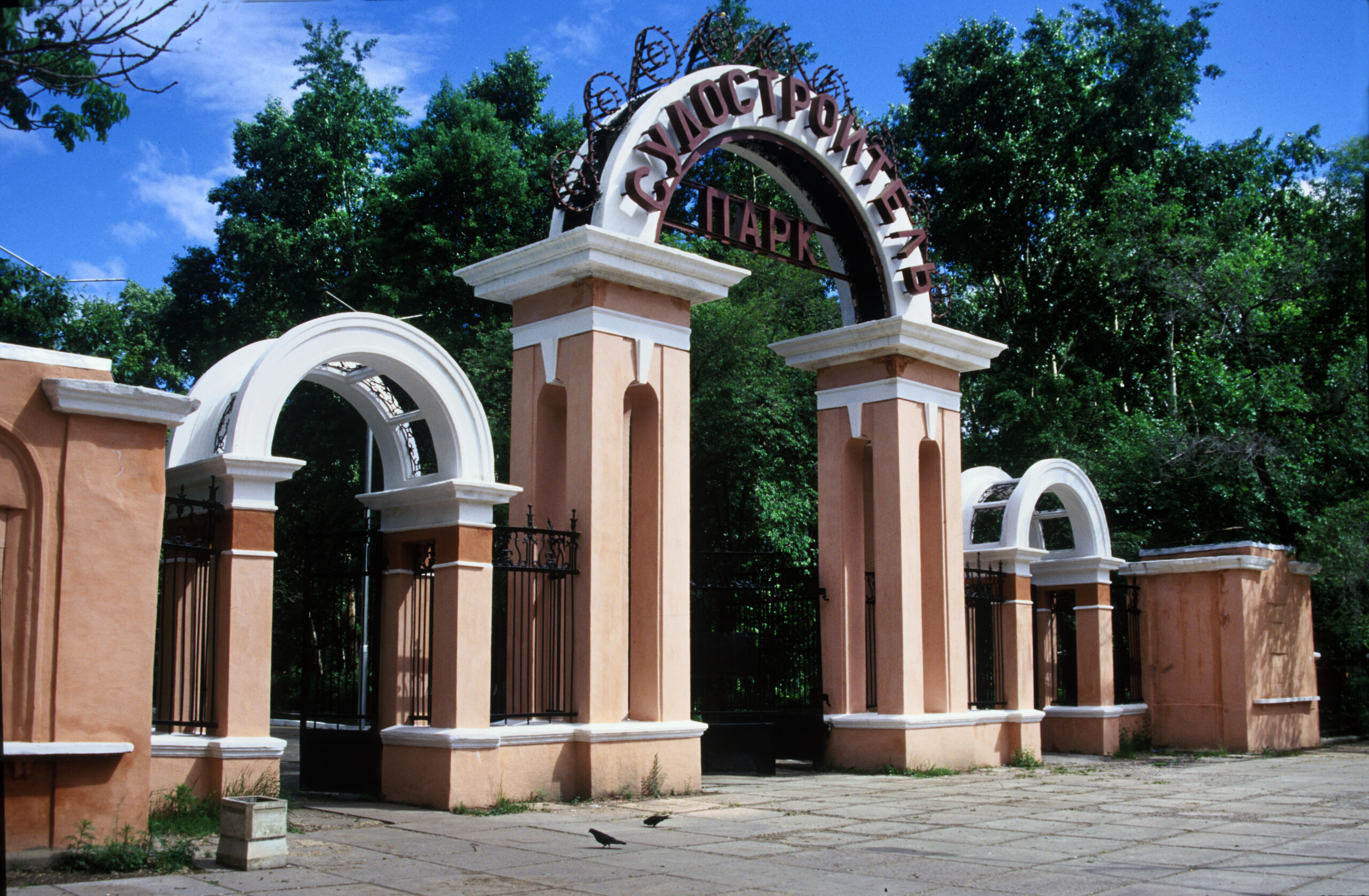
Monumental Public Buildings & Statues
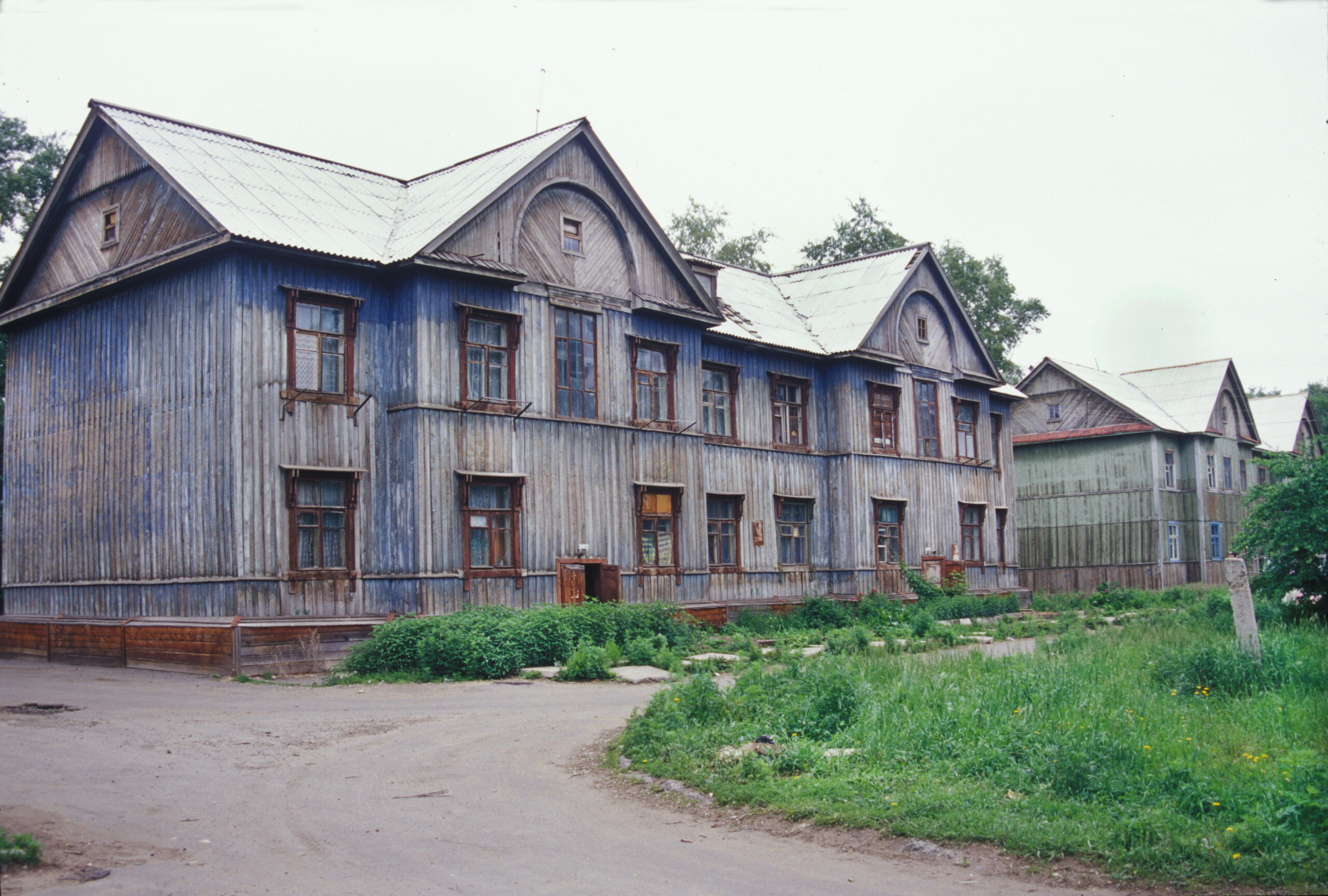
Founded in 1932, Komsomolsk-on-Amur is located in a windswept, marshy lowland on the Amur River and inevitably evokes comparisons with another Russian city, forcibly created in an extremely inhospitable environment: St. Petersburg. At least St. Petersburg had the advantage of proximity to great European cultures, while Komsomolsk seems remote. This is part of the answer to the question. In 1930, the Soviet government and its Central Executive Committee declared the development of the Far East a state priority. Soviet control over this vast, sparsely populated region seemed precarious. For example, the vast Amur River basin only became part of the Russian Empire in the 1850s as a result of treaties concluded with the Qing Dynasty and confirmed by the 1860 Convention of Peking.
By the early 20th century, the Trans-Siberian Railway had spurred the rapid development of new eastern settlements such as Khabarovsk and Vladivostok. However, these settlements, which soon became cities, remained vulnerable to international borders. During the Russian Civil War, the Siberian Railway allowed White and Red bandits to devastate cities and destroy infrastructure in the Far East until the end of 1922. At the same time, a significant portion of the territory was occupied by foreign troops, primarily Japanese. During part of the 1920s, Chinese forces also posed a potential threat.
Undoubtedly, these challenges were still fresh in the minds of the Moscow decision-makers. Amid the tense geopolitical situation in Asia, their goal was to create a new, adequately protected industrial base for the Soviet presence in the region. In January 1932, a state commission led by the prominent communist leader Yakov Gamarnik (1894–1937) selected a site on the left bank of the lower Amur River near the small Russian village of Permskoye. Nearby was the Dzyomgi camp, populated by members of the indigenous Nanai people. The river’s width at this location was suitable for the establishment of a shipyard, a priority identified back in 1931. Although the Amur River provided a crucial transport route, the new site was also located approximately 400 km from the regional capital, Khabarovsk, located near the Manchurian border at the confluence of the Amur and Ussuri rivers. For the planned industrial center, this remoteness offered strategic advantages.
In February 1932, the site was approved by the Soviet government, which simultaneously approved the construction of an aircraft factory in Dzyomgi. On paper, this looked promising, but the critical problem was the lack of qualified labor. In the spring, a nationwide recruitment drive was announced through the Komsomol network, and by April, more than 6,000 volunteers had arrived in Khabarovsk. The first group landed in Perm in May 1932.
It’s almost impossible to imagine the hardships these young men faced, driven by a lofty idealism bordering on fanaticism. The grueling work of clearing and draining the swampy terrain, swarming with mosquitoes and other insects, was carried out with the most primitive tools. They lived in army tents and dugouts, with only a few living in wooden barracks. Floods destroyed much of the work due to improper land surveying. Lack of food, clothing, and medical care in the fall created new crises. The outbreak of typhus and scurvy nearly caused panic; temporary relief came when local Nanai tribes provided fresh reindeer meat. The onset of winter and the freezing of the river further complicated medical care. Vehicle routes across the frozen Amur River were extremely difficult to navigate.
And yet, the city, officially named Komsomolsk in December 1932, persevered. Wooden barracks were built, a sawmill opened in 1933, and the foundations of a shipyard were laid in June. In January 1934, a new group of several hundred construction workers made the “ice march” up the frozen Amur River to the construction site. In September, another wave of Komsomol volunteers arrived. In May 1935, the first temporary pier was completed, and construction of an aircraft factory began. In 1934, the initial city plan was developed by a group of Leningrad architects led by Boris Dančić, who died during the evacuation from besieged Leningrad in February 1942.
At the same time, Moscow approved plans to build a metallurgical plant. In 1935, construction began on a 365-kilometer railway line connecting the city to the Siberian Mainline. It was completed exceptionally quickly in 1936. And in 1938, design work on an oil refinery began, as new groups of workers arrived. However, the population remained predominantly male. A new campaign attempted to address this problem. In 1937, a letter from communist activist Valentina Khetagurova (1914–1992) gained nationwide notoriety. She called for female volunteers to join her in developing the Far East. Thousands, primarily Komsomol members, responded. In late 1937, the first group of 700 young women—the “Khetagurovkas”—arrived in Komsomolsk.
Yet, for all this youthful enthusiasm, there was another side to the development of Komsomolsk and the Far East—the use of forced labor from the concentration camp system. Soviet-era publications were silent about the role of Gulag prisoners, who also suffered from scurvy and typhus. Belated recognition is now being given to the thousands of prisoners of Amurstroy, part of the Dalstroy system, which rapidly expanded as the repressions intensified in the late 1930s, during the Yezhov era. Thus, Komsomolsk represents a combination of idealistic appeals and forced labor. Yakov Gamarnik, who contributed so much to the development of the Far East and Komsomolsk, committed suicide in May 1937, preferring to face inevitable arrest as an early associate of Leon Trotsky. From 1945 to 1949, the workforce at Komsomolsk construction sites also included approximately 15,000 Japanese prisoners of war, captured in August 1945 during the Red Army’s crushing defeat of the Kwantung Army, which occupied Manchuria.
When stone buildings, more substantial than the wooden barracks, began to be erected in Komsomolsk in the late 1930s, they resembled the austere forms of Soviet modernist architecture of the 1920s. However, classicist elements soon appeared, albeit minimally, in the so-called “Stalinist Empire style.” The earliest example is a large residential building from 1937 at 31 Kirov Street, with balconies, loggias, and a multi-story entrance arch leading to the courtyard of the U-shaped building. The editorial office of the city newspaper “Stalinsky Komsomolsk” (since 1956, “Dalnevostochny Komsomolsk”) was also located at this address. Kirov Street was named after Sergei Kirov, the leader of the Leningrad Communist Party, who in 1934 declared his support for the construction of Komsomolsk. In general, building design was usually entrusted to Leningrad architects, who were favored for projects in the northern Soviet Union for much of the Soviet period. A more impressive example, reminiscent of St. Petersburg classicism, was built in 1938 at 9 Lenin Street, where a large colonnade frames the central arch.
With the onset of World War II, construction efforts focused on Komsomolsk’s new factories, which were dedicated to intensive military production. After the war, Komsomolsk was rewarded for its contribution to the defense with the creation of a series of grand architectural ensembles in the spirit of St. Petersburg neoclassicism. The master plan, developed by the Leningrad branch of the Gosstroyproekt design agency, envisioned at least eight multi-story buildings that were intended to create vertical dominants throughout the city. Of these, only three were built. The first was a five-story building, completed in 1952 at the corner of Stalin Avenue (now Mira Avenue), 12, and Ordzhonikidze Street. The vertical accent here is created by a corner tower, crowned with a neoclassical tempietto with a peristyle colonnade and spire.
A similar design was used in the building completed the following year at 43 Mira Avenue, but here the window treatments are more elaborate, and a row of medallions runs along the attic above the massive cornice. The third and most richly decorated tower building was constructed from 1954 to 1956 for metallurgists and their families at the major intersection of 21 Lenin Avenue and Oktyabrsky Avenue. The site overlooks Lenin Square, generally considered the heart of the city. The building’s corner tower is crowned with a spire and combines neoclassical elements with a parapet reminiscent of the Kremlin battlements. This tower is considered the unofficial symbol of Komsomolsk.
Besides the tower blocks, there were other impressive neoclassical structures, such as the apartment building completed in 1950 at 13 Kalinina Street, at the intersection with Sovetskaya Street. This important urban planning site received a corresponding architectural treatment: the corner is accented by a curvilinear arcaded façade with neoclassical window treatments and a cornice accented with dentils. The purest embodiment of neoclassical design, drawing on St. Petersburg architecture, appeared in 1958 with the completion of the Construction Trust building (now the Amur Customs House) at 34 Krasnoarmeyskaya Street. Its style evokes the works of Giacomo Quarenghi, one of the leading architects of the era of Catherine the Great.
Cultural institutions also occupy a significant place in the city’s architecture, primarily the cultural centers built at major industrial enterprises. The first of these was the Shipyard Cultural Center, begun in 1939 and completed in 1944 according to a design by Leningrad architects F. I. Milyukova and V. I. Taleporovsky. At that time, the ceiling was painted in a style that surprisingly combined an imitation of early 19th-century classical decor with Soviet motifs depicting parachutists. In the 1960s, the building underwent a large-scale reconstruction, including the expansion of its side wings, according to a design by Leningrad architects A. Ya. Gladkikh and S. I. Sokolov. Completed only in 1975, the new structure acquired a completely different, modern appearance, albeit with some classicizing elements. Part of the original interior was preserved, including the 1944 ceiling paintings, which I was fortunate enough to photograph in June 2002. The interior also contains monumental mosaics, including the famous composition “Youth and Struggle,” completed in 1965 after years of work by artist Nikolai Dolbilkin. Much of the central theater space was destroyed or severely damaged by a catastrophic fire in April 2003. More than two decades later, this space remains an open ruin, although the side wings, including the swimming pool, continue to function.
Cinemas also played an important role in cultural life. Although they are less popular now, one of the earliest examples, the “30 Years of October” cinema, was well preserved when I photographed it in 2002. Begun in 1946 and opened the following November, this building is an intriguing blend of avant-garde design and classical details. The upper part of the façade is adorned with a bas-relief frieze depicting attacking Red Guards.
The Palace of Shipbuilders was followed by the Aircraft Manufacturers’ Palace of Culture, construction of which began in 1954 to a design by Moscow architect Nikolai A. Metlin; it was intended to open for the 40th anniversary of the Bolshevik Revolution. Due to financial difficulties, the building was not completed until 1963, and was missing a number of decorative elements. Its enormous entrance portico appears somewhat isolated within the even more expansive main façade. In 1967, the building was renamed the “50th Anniversary of October” Palace of Culture, but has now been reverted to its original name. There is also a smaller Palace of Culture of Railway Workers, completed in 1963, with a neoclassical façade facing 1 Chkalov Street.
The growth of Komsomolsk-on-Amur in the 1970s and 1980s necessitated a more industrialized approach to architecture, which was clearly evident in the large residential complexes constructed during this period. Many of these buildings are adorned with monumental art on their side facades. The neo-constructivist, rationalist style found expression in the spacious River Passenger Terminal on the Amur, completed in 1976 according to designs by Leningrad architect B. A. Votinov.
Following the collapse of the Soviet Union in 1991, the city’s industrial complexes underwent significant restructuring to reflect the new economic realities. The shipyard no longer builds nuclear and non-nuclear submarines, but continues to operate, fulfilling smaller orders. The oil refinery, which runs on Sakhalin oil, maintains a high level of production. The metallurgical plant also continues to manufacture heavy engineering products.
The Komsomolsk-on-Amur Aircraft Production Association remains the city’s main industrial pillar, currently the largest enterprise of its kind in Russia. Its Sukhoi aircraft are highly competitive in the lucrative international arms market, which shows every sign of further expansion. The company also plays a leading role in the production of the Sukhoi Superjet 100 mid-size passenger jet. Due to economic restructuring, Komsomolsk’s population has declined significantly—from a peak of 319,000 in 1990 to a current estimate of 234,000. Environmental degradation, particularly pollution of the Amur River from upstream sources, poses long-term public health threats.
Nevertheless, Komsomolsk-on-Amur continues to play an important role in the economic and cultural life of the Russian Far East. Its pleasing appearance has spurred efforts to preserve the city’s orderly neoclassical architecture, reflecting its complex Soviet past. To this day, the city has remarkably preserved the architectural atmosphere associated with the Stalinist and subsequent Soviet periods. Soviet culture is also reflected in the city’s developed monumental art and sculpture. In a development that Soviet planners certainly could not have foreseen, the city now boasts several Orthodox churches, including a cathedral dedicated to the Kazan Icon of the Mother of God consecrated in 2001, as well as a synagogue and a mosque maintained by the local Tatar community.
Text by William Brumfield
Link: https://roscult.org/archives/6418